DANIELEGALLERY
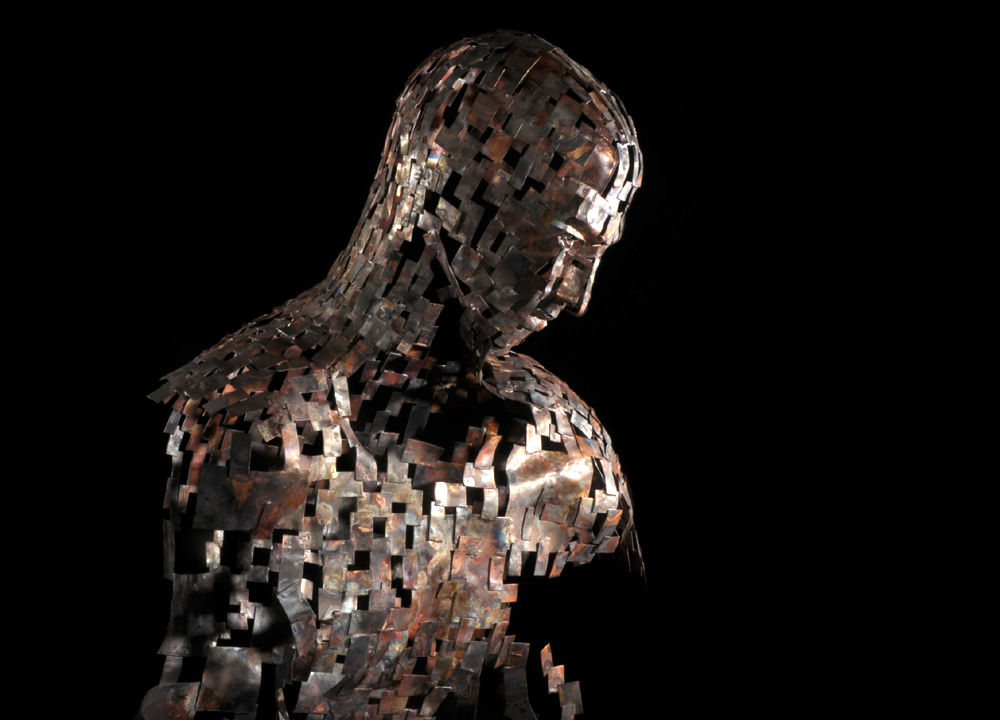
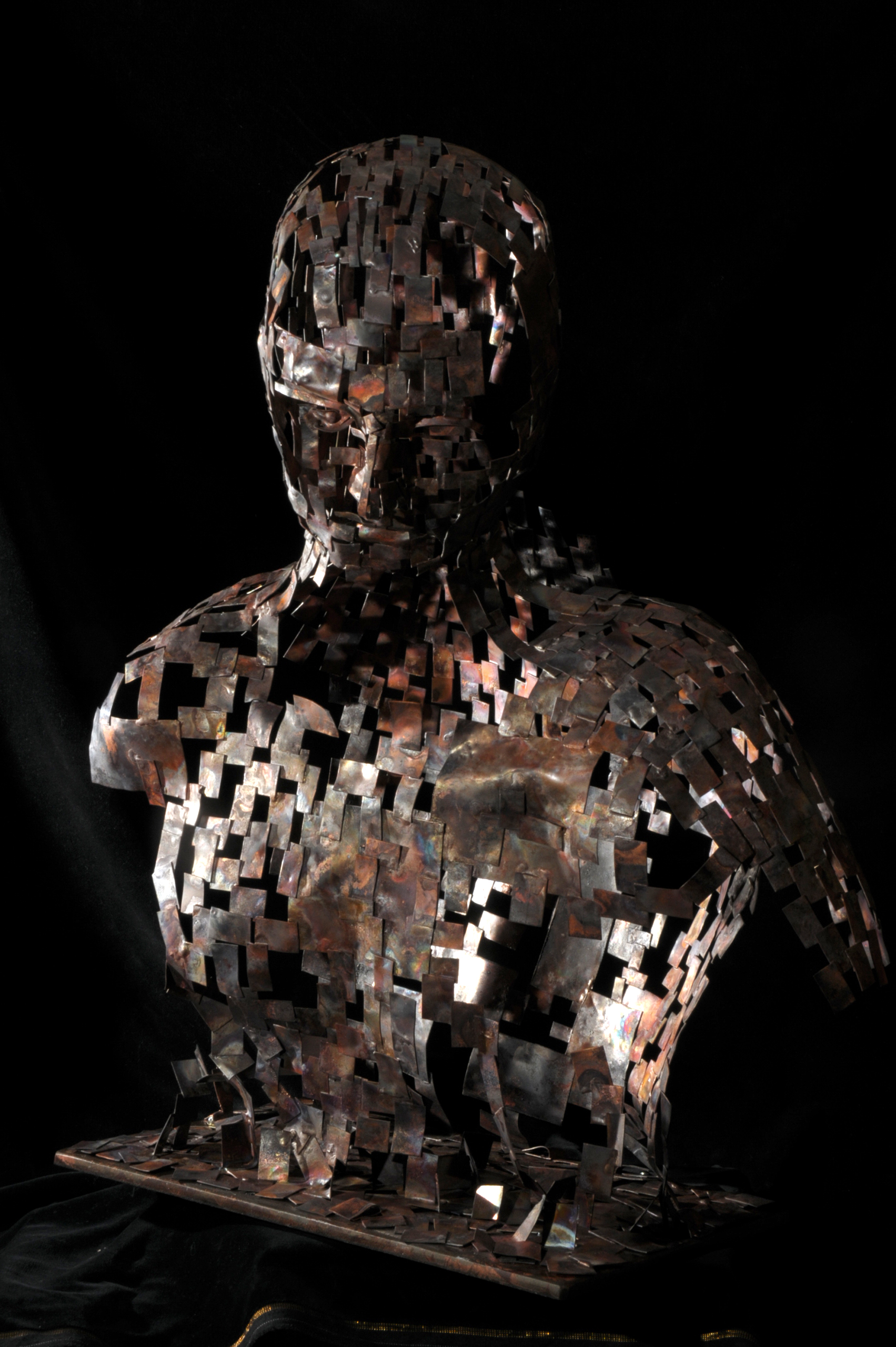
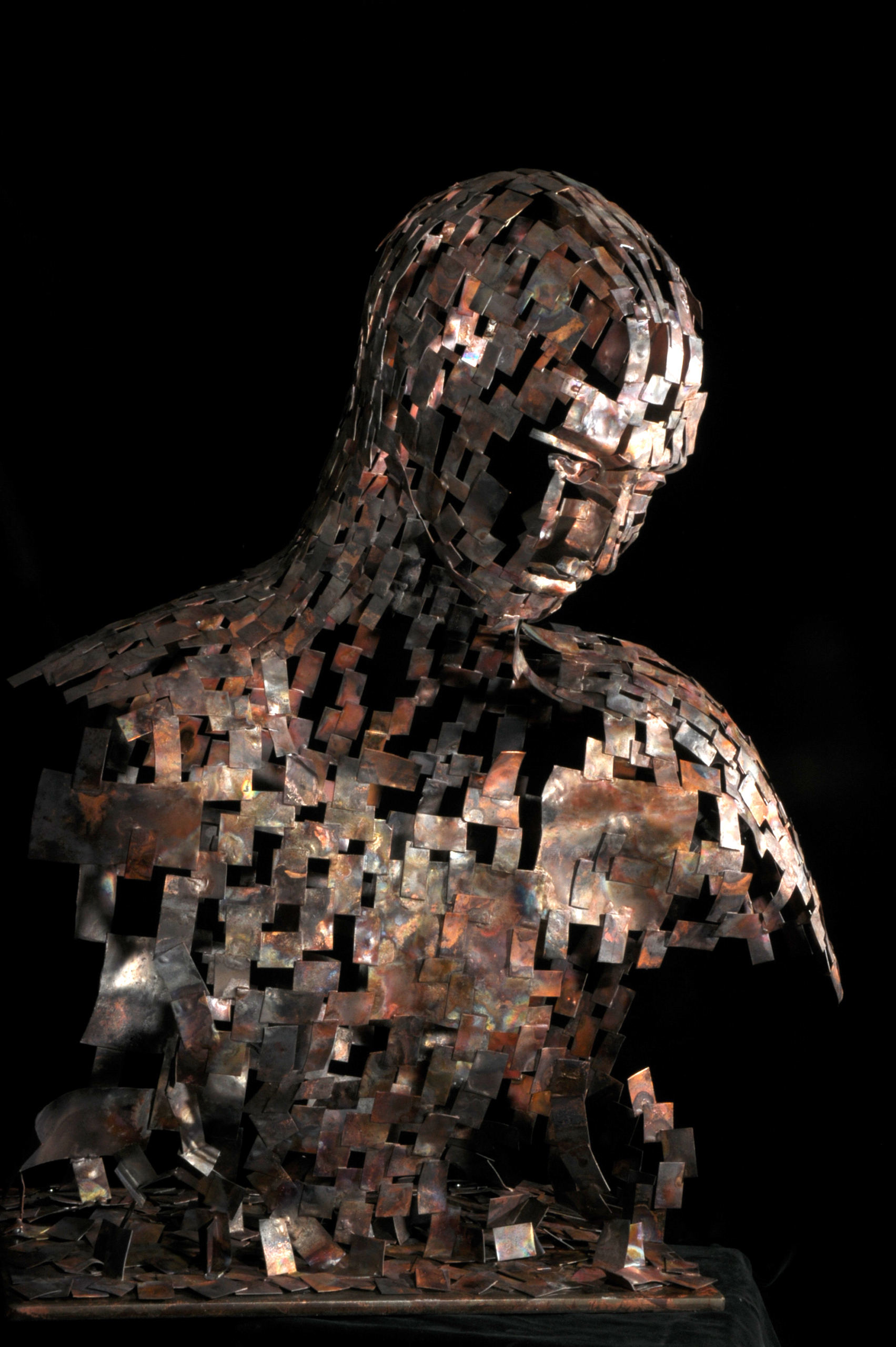
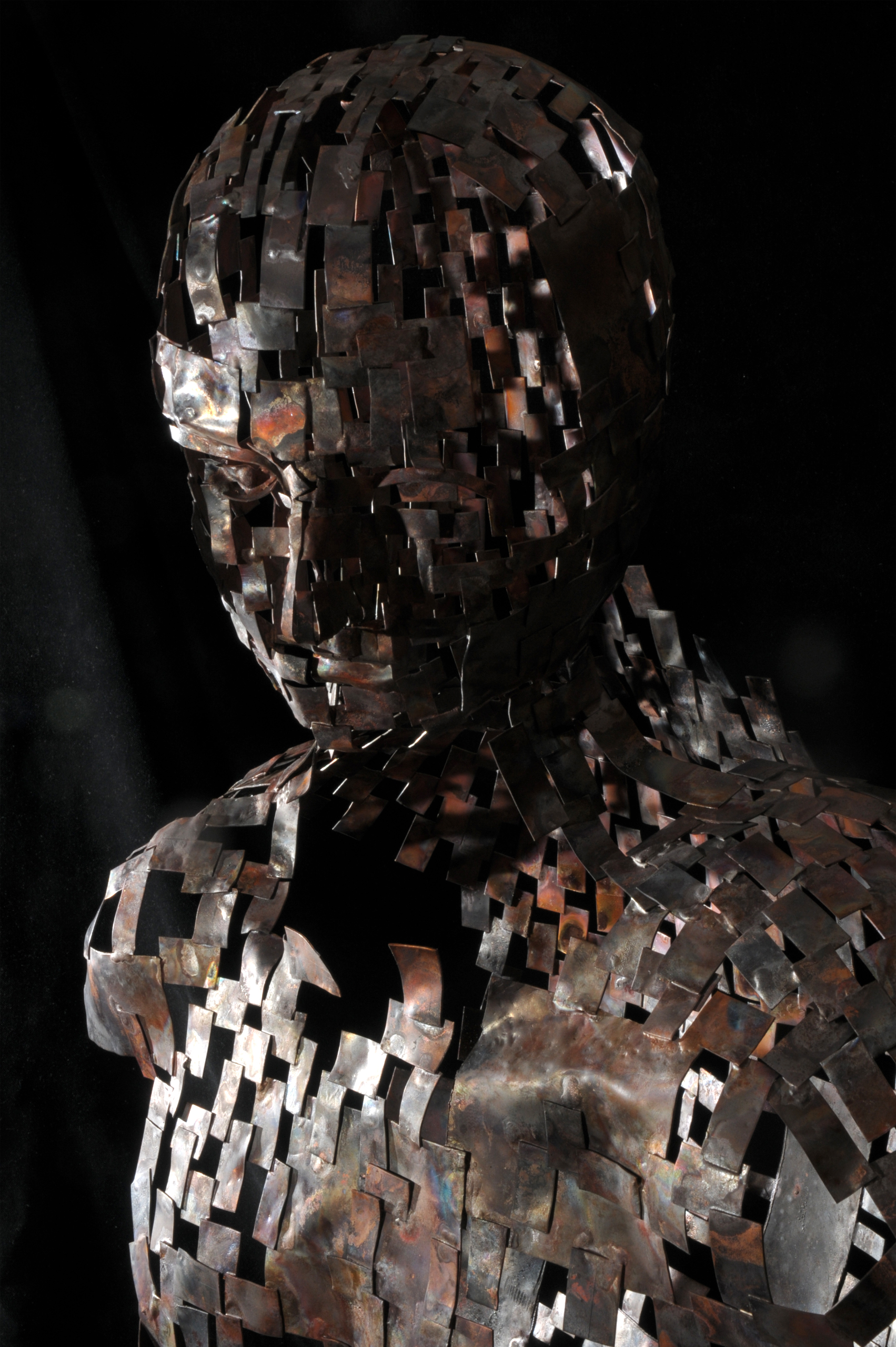
Daniele is born from the indissoluble encounter between fullness and emptiness, between what the matter constructs and what the absence reveals. The sculpture develops as a human figure in the making, composed of hundreds of copper pieces that unite and separate at the same time, generating a presence that is strong and recognizable yet never fully defined.
Belonging to the expression of Fragments, the artwork explores the relationship between structure and dissolution, between the need to give shape and the necessity to leave room for the imagination. The body emerges from the matter as if it had been built slowly, piece by piece, following an organic growth that keeps the visible traces of its own creative process.
Daniele comes from the earth and is carnal matter. Before being able to be crossed by the gaze, before showing itself as light and almost transparent, it was mass, weight, a compact presence. Each copper piece represents a constituent element of the form, a fragment of reality that contributes to the construction of identity. Yet, it is precisely in the alternation between present parts and missing parts that the sculpture finds its deepest meaning.
The metallic pieces, ideally still warm from the artist’s work, recount the dimension of doing, of building, of shaping. They are the visible, the concrete, the classic language of sculpture. The empty spaces that interrupt them instead become the place of intuition, perception, and memory. They do not represent a lack, but a different presence, invisible yet essential.
The void does not subtract matter from the artwork: it gives it meaning. Through these openings, the gaze can pass beyond the surface, penetrate inside the figure, and capture its most intimate dimension. The sculpture does not limit itself to occupying a space, but continuously dialogues with the surrounding environment, letting in light, shadow, and the viewer’s gaze.
The figure thus appears suspended between construction and fading. From certain perspectives, the anatomical solidity of the body emerges with strength; from others, it seems almost to dematerialize, transforming into a set of signs, rhythms, and vibrations. This perceptual ambiguity becomes an integral part of the artwork and invites reflection on the very nature of human identity, made up not only of what we show, but also of what we keep inside ourselves.
The echo of the hammer shaping the copper, the hiss of the flame modifying its surface, and the physical energy of a process that transforms raw matter into an expressive language can still be felt. Each fragment preserves the memory of the gesture that generated it and contributes to the construction of a larger organism, capable of telling the complexity of the human being.
Daniele thus becomes a reflection on the duality that accompanies every existence. We are what appears and what remains hidden. We are form and thought, body and memory, presence and absence. The sculpture makes this delicate balance visible, suggesting that it is often the void that defines the fullness, just as silence gives meaning to words.
In this continuous dialogue between matter and space, the figure finds its own expressive strength: not as a concluded and definitive image, but as an open presence, capable of welcoming ever-new interpretations, emotions, and meanings. Because what makes Daniele unique is not only what is seen, but above all what, despite not being matter, continues to live inside the form.
The soul builds the body, the void reveals its essence. A figure emerging from the continuous dialogue between presence and absence. Daniele is what appears to the gaze, but also what is perceived beyond the matter.