SIAMO LE NOSTRE MANCANZEGALLERY
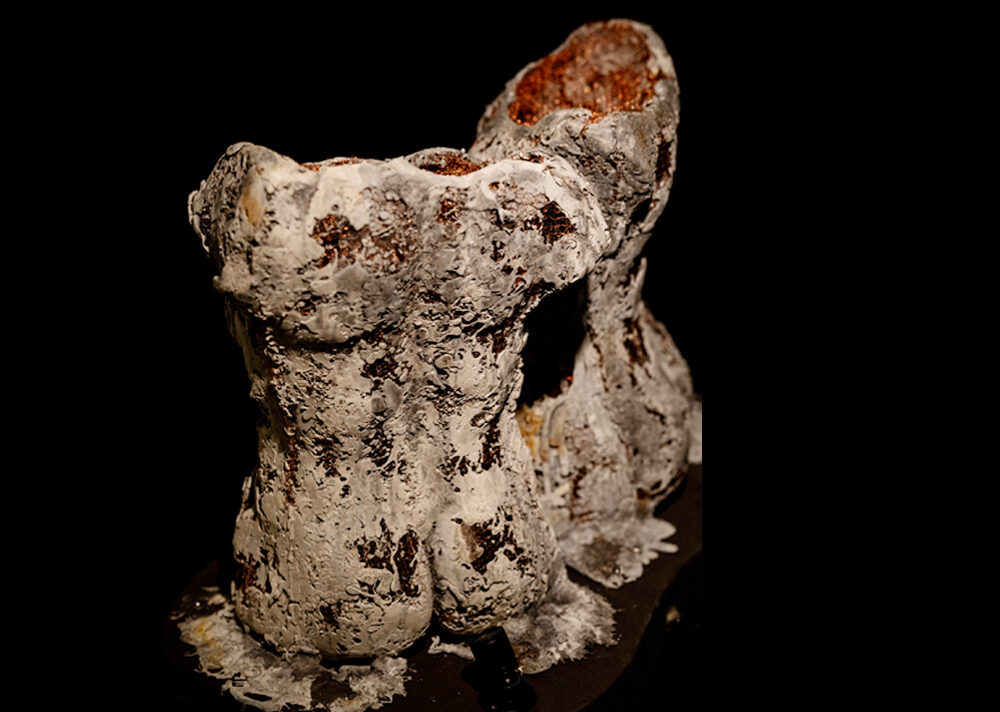
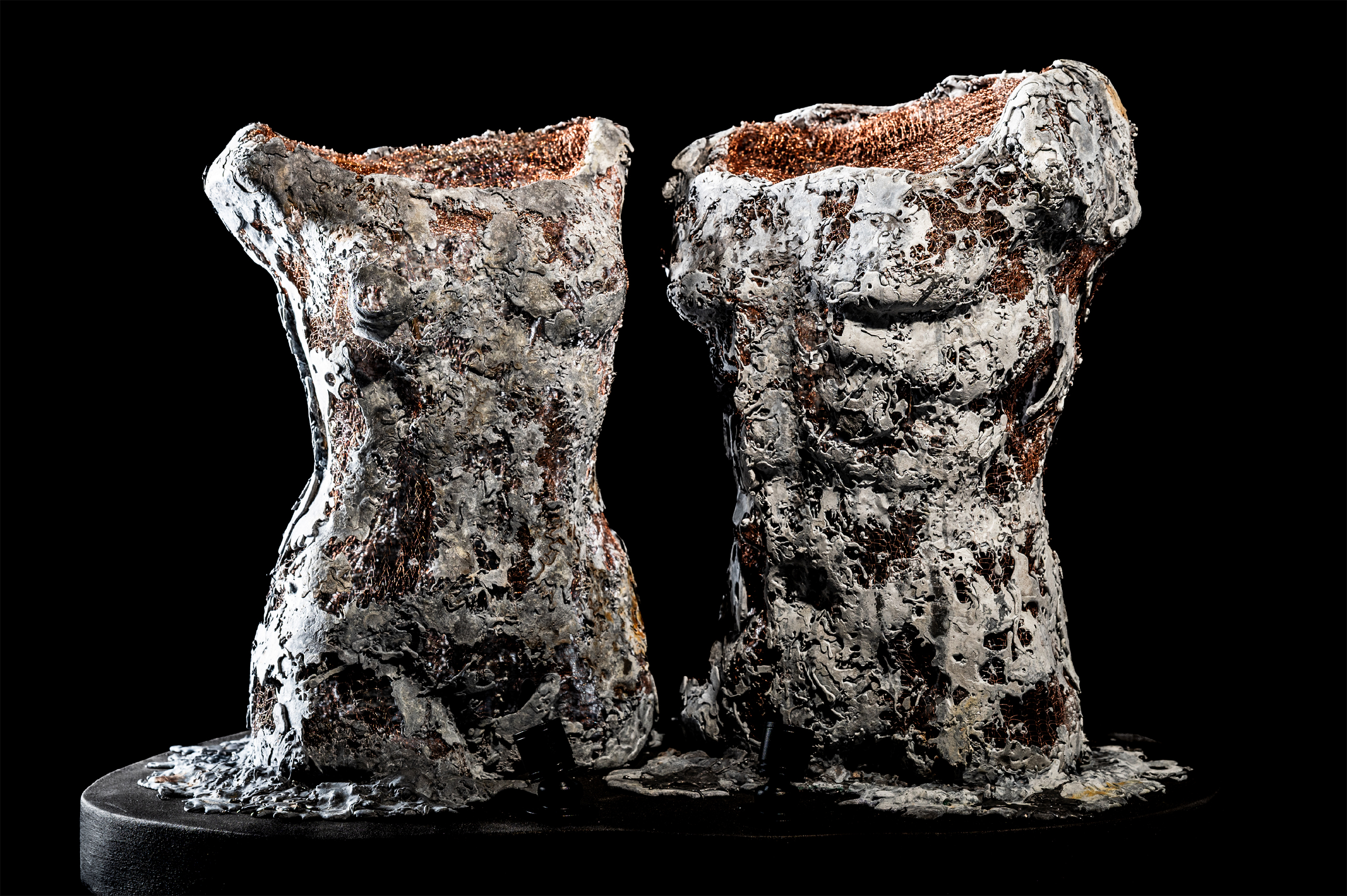
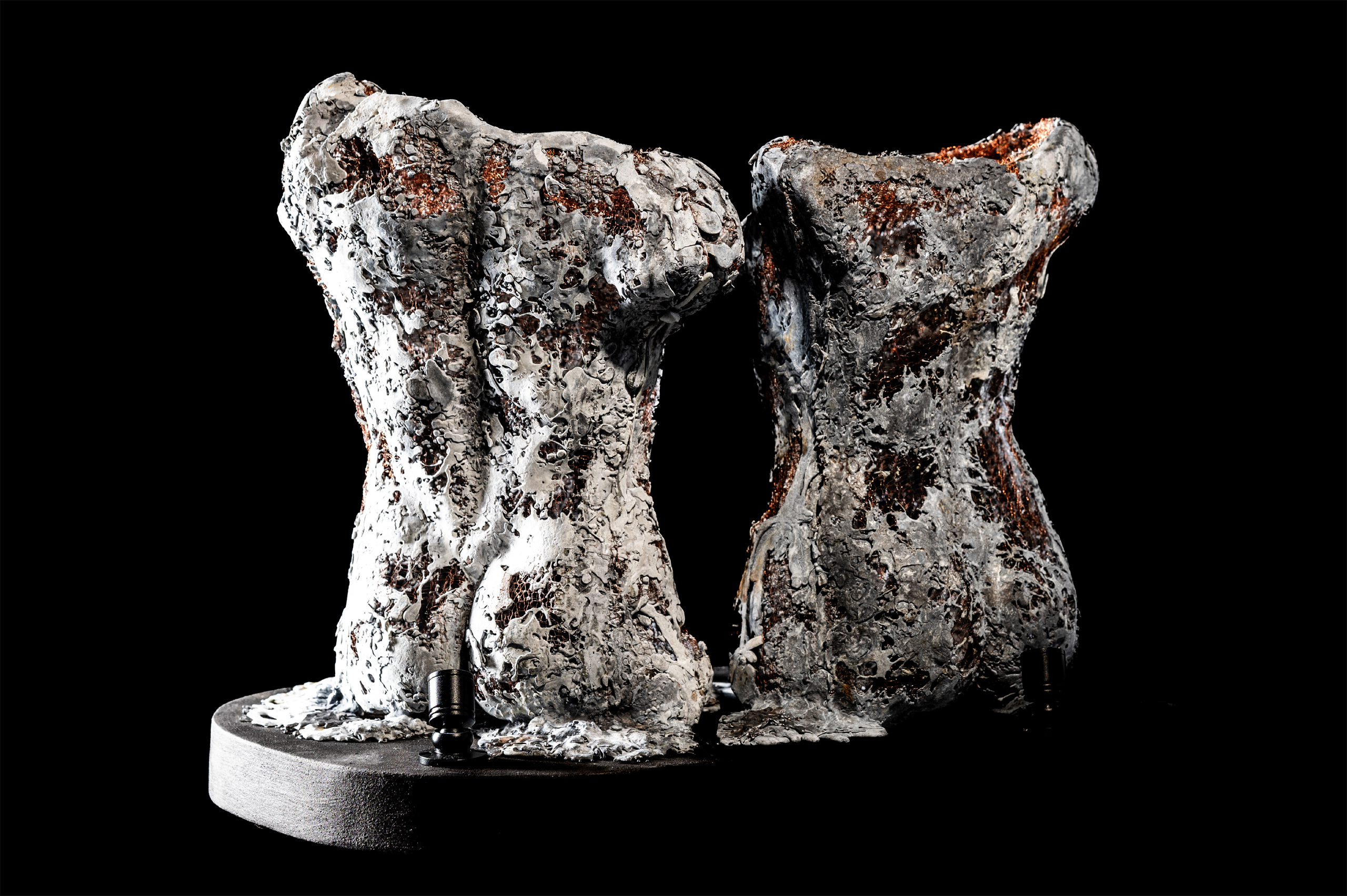
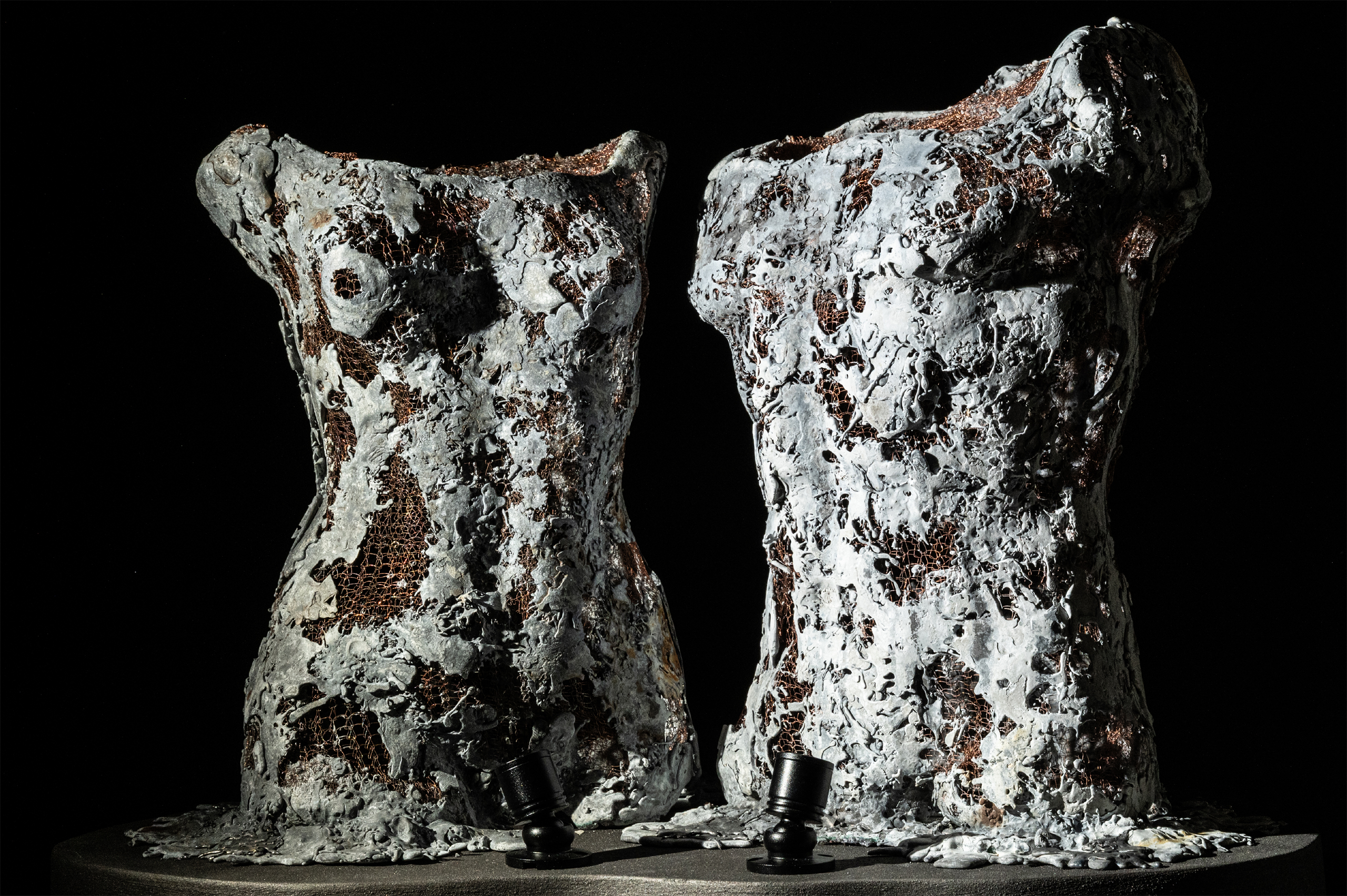
The two sculptures are born from an initial formal research conducted in wax—a primary, sensitive matter capable of holding the gesture and returning the memory of contact. From this process, two busts emerge, one male and one female, which are not intended to represent specific individuals, but rather to embody a universal condition: that of the human body exposed, vulnerable, crossed by time and experience.
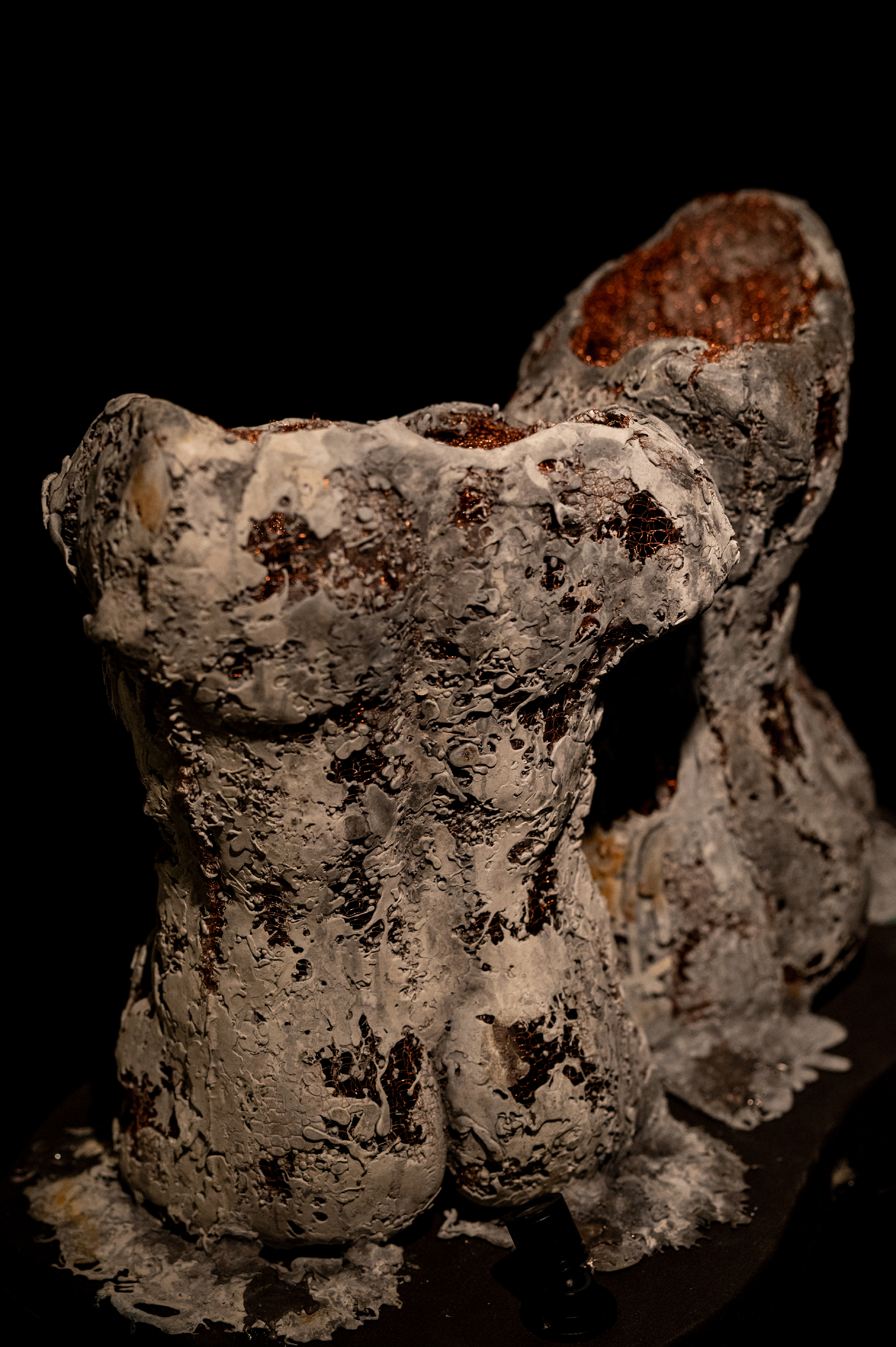
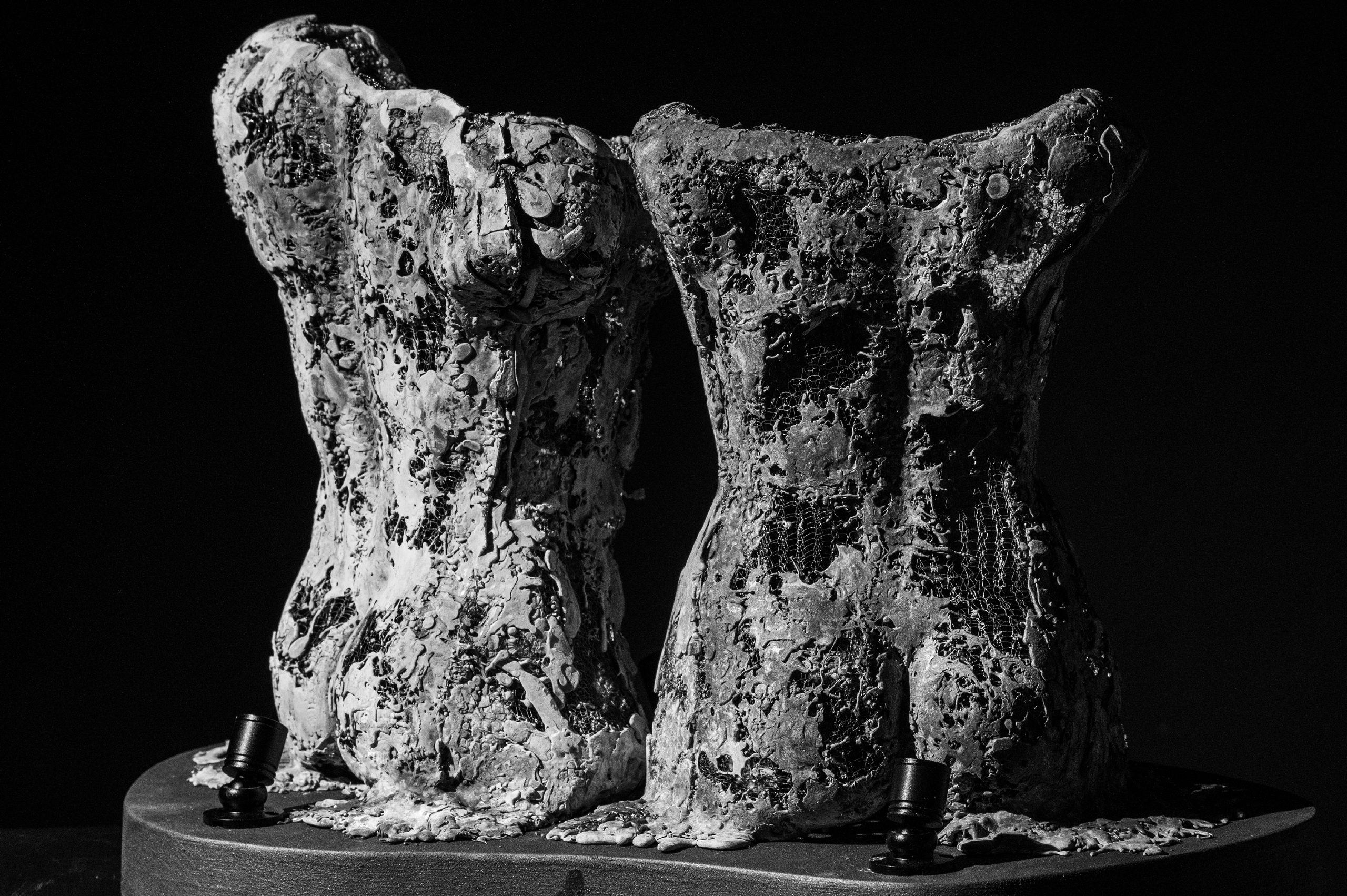
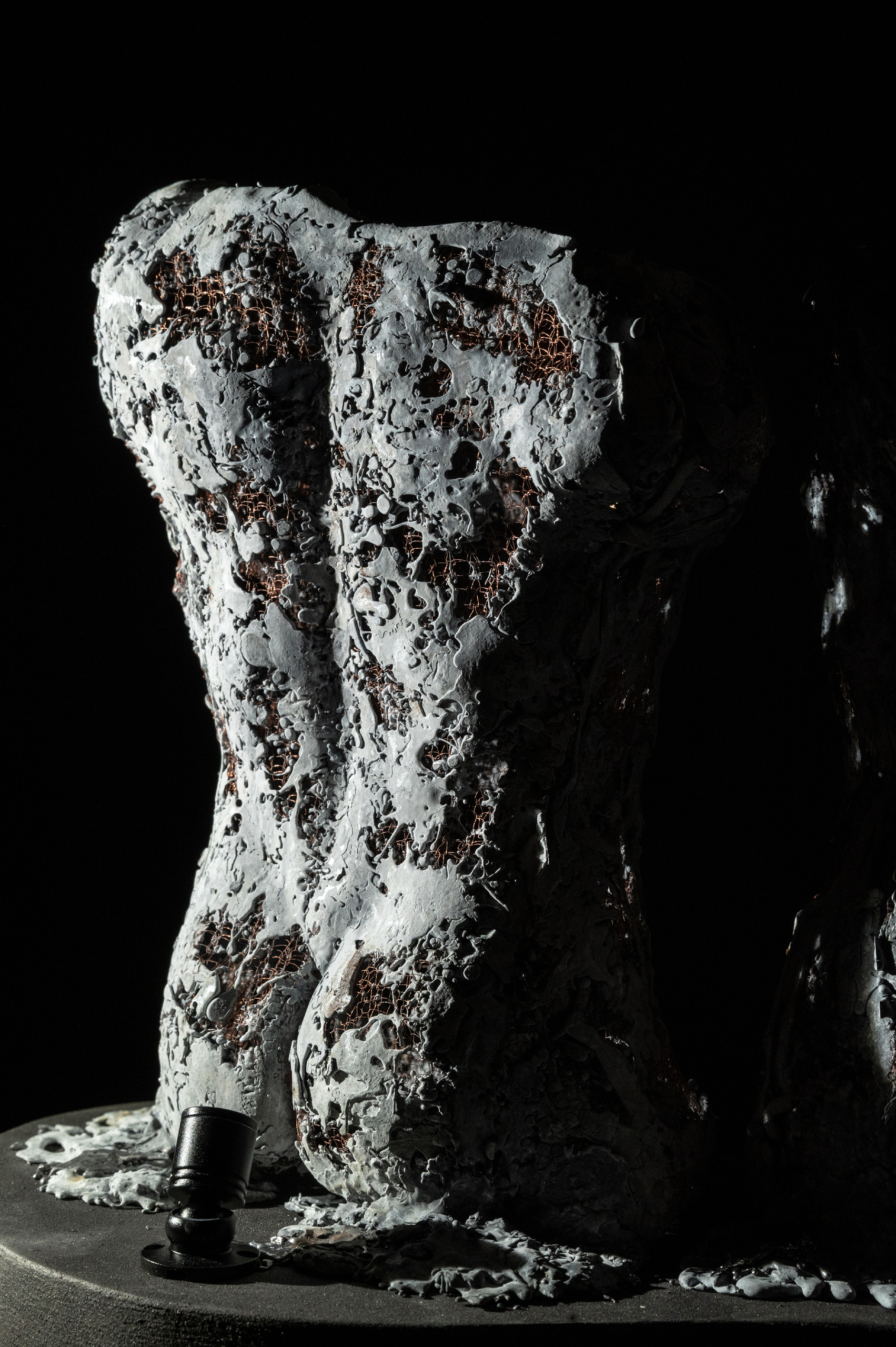
The subsequent phase introduces the artist’s personal technique, defined as the “filigree of shortcomings”. This intervention hollows, lightens, and tears the surface, generating a subtle and discontinuous texture that recalls traditional filigree, but subverts its decorative meaning. Here, in fact, the void becomes the protagonist: the openings, absences, and subtractions are not true formal elements, but signs of wounds, traces of what has been removed, lost, or transformed. The matter becomes the testimony of a shared fragility, of an identity that is built also through its cracks.
The “shortcomings” thus become an expressive and symbolic language: they tell of the invisible scars that every body carries with it, reflecting the tensions and violence—physical, emotional, social—that cross contemporary existence. The two busts dialogue with each other within this space of vulnerability, suggesting a relationship that is not opposition, but resonance: male and female meet in the common experience of the wound and of resistance.
The final patination, achieved through the use of vinegar and salt on a lead base, gives the surfaces an ancient, almost archaeological tone. This treatment is not merely aesthetic, but conceptual: it introduces a temporal dimension that stratifies the artwork, as if these bodies came from a remote past or a sedimented collective memory. The patina amplifies the sense of distance and, at the same time, of permanence, evoking the idea that human wounds are as contemporary as they are ancestral.
To this material and symbolic dimension is added the intervention of light, an integral part of the artwork. The light sources, precisely positioned at the base, do not perform a truly exhibitive function, but act as tools of revelation: they visually shape the volumes, cross the gaps of the filigree, and project shadows that amplify the perception of the “shortcomings”. Light thus becomes an extension of the sculptural gesture, capable of continuously reshaping the form and activating a dynamic interpretation of the artwork.
In this way, the sculpture opens up to a relational dimension. The variability of light—in its intensity, direction, and presence in space—introduces the possibility of an experience that is not fixed, but shared. The owner of the artwork is no longer just a spectator, but a participant in the process: through interaction with the illumination, they contribute to redefining the appearance of the surfaces, bringing details to light or making them disappear, and generating new perceptual configurations.
Light, therefore, not only highlights the morphology, but concretely achieves the concept of “shared modeling”. The artwork is no longer a concluded and immutable object, but an open system, in which form and perception are built over time, in the encounter between the artist’s intention and the experience of those who welcome it. In this continuous negotiation between presence and absence, matter and light, the deepest meaning of the work is fulfilled: making human fragility visible as a space for relation, transformation, and awareness.