LEONARDOGALLERY
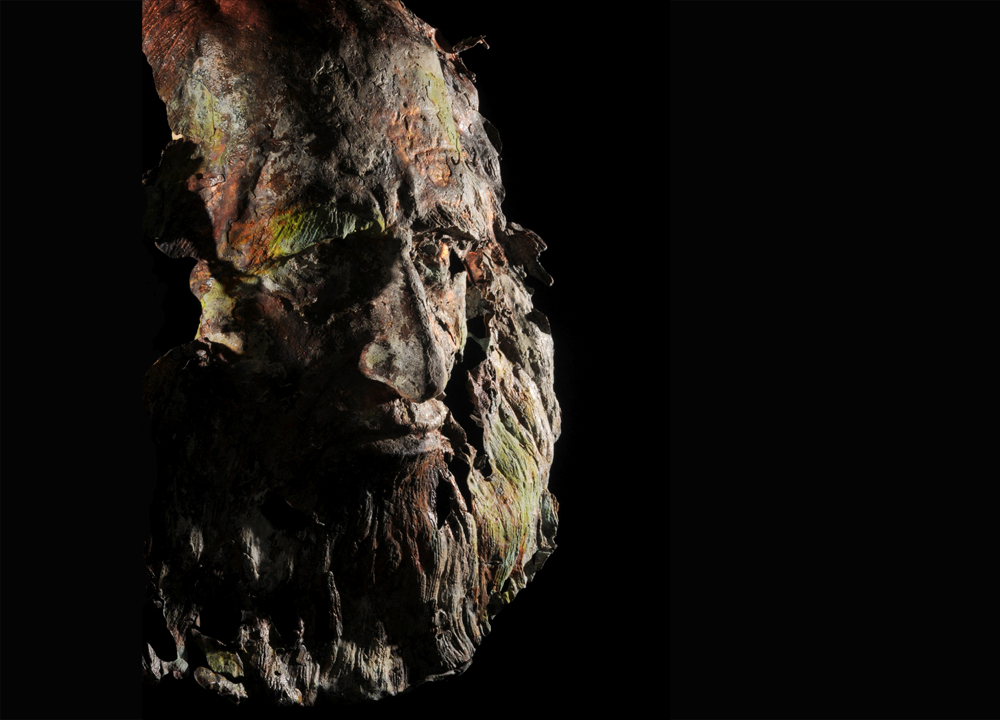
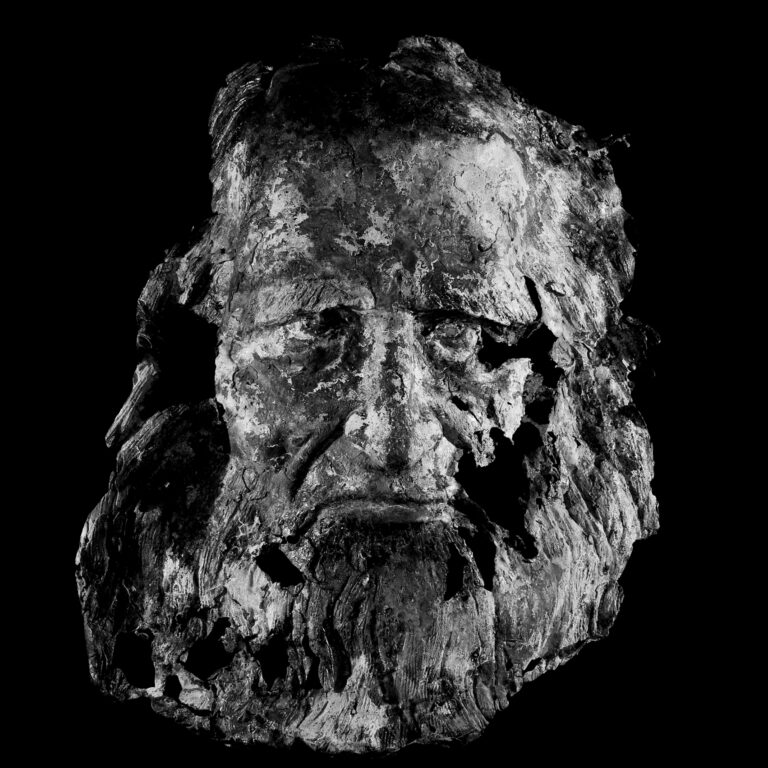
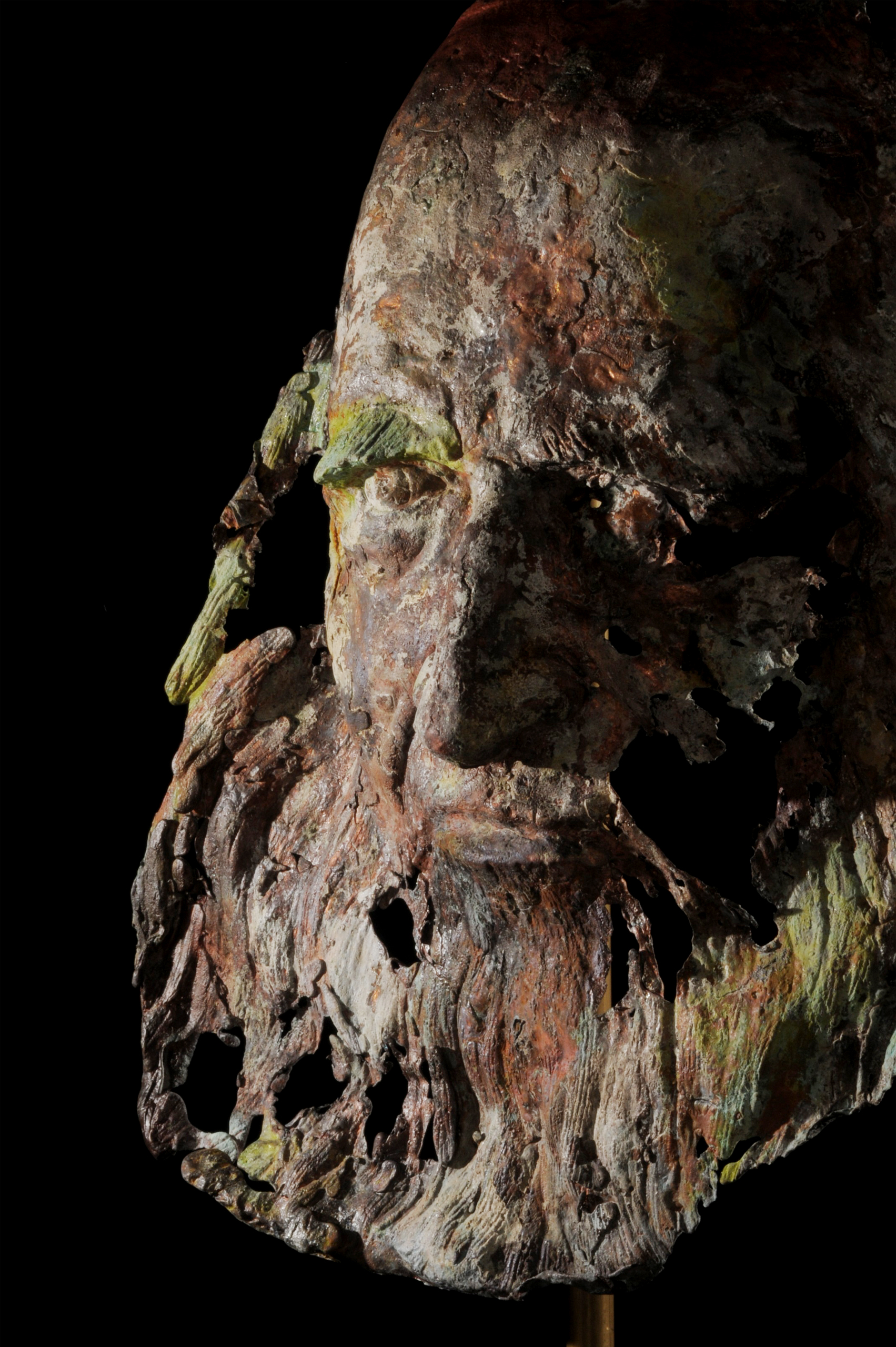
Created in 2019 on the occasion of the quincentenary of the death of Leonardo da Vinci, this sculpture was born as a tribute to one of the most extraordinary figures in human history. The artwork takes inspiration from the Master’s most famous iconography, the celebrated red chalk self-portrait, but finds its primary reference in the engraving made by Trento Cionini for the minting of the historic 1967 Italian 50,000 Lire banknote—an image that for decades helped fix the face of Leonardo in the collective imagination.
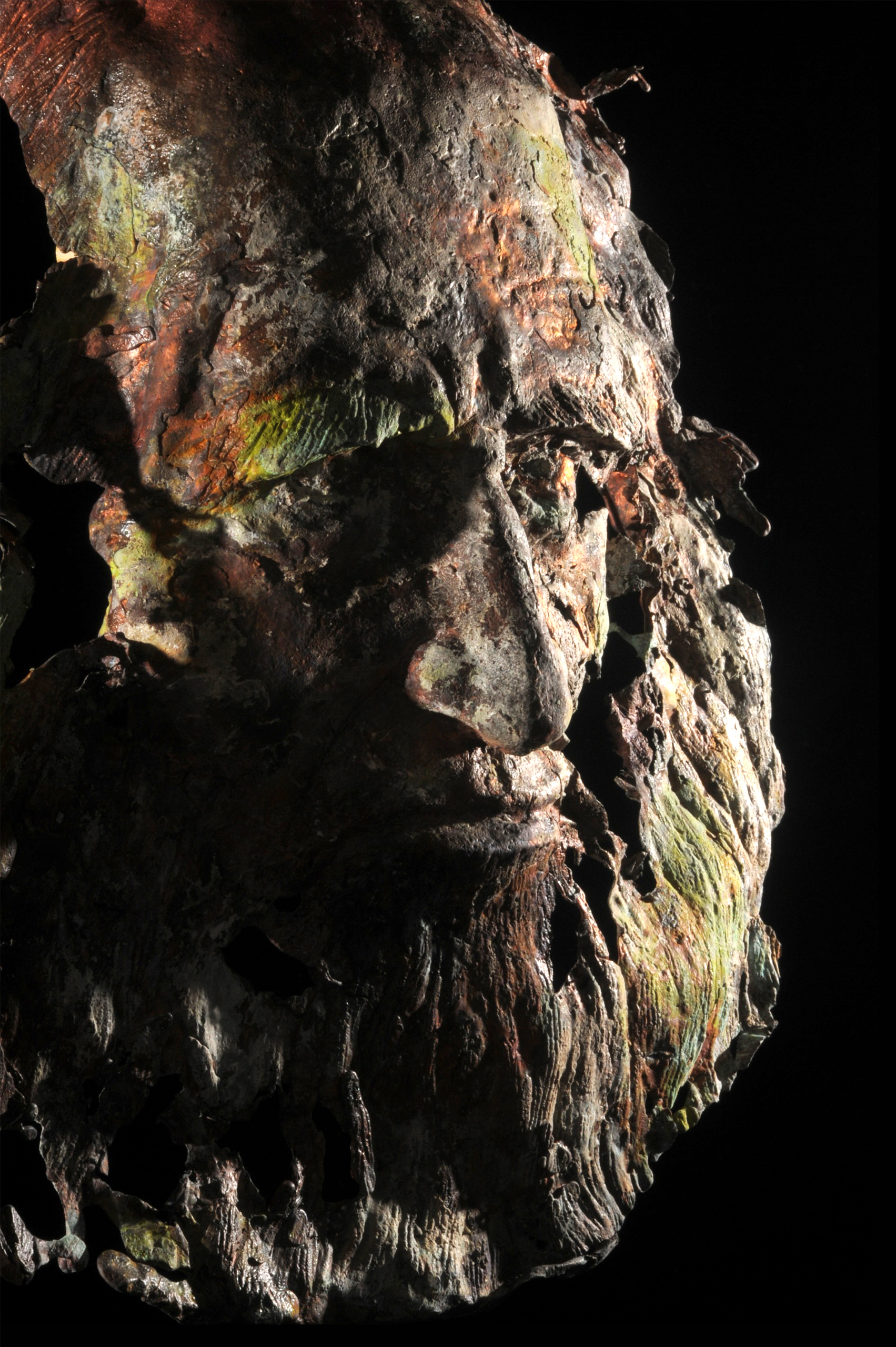
Rather than a simple representation, the sculpture intends to restore the complexity of a man who crossed the boundaries between art, science, engineering, and philosophy, leaving a legacy that continues to question the present. The face emerges from the matter as an ancient presence, almost resurfaced from time. The corroded surfaces, the stratifications, and the chromatic transformations generated by acid patinas and torchings evoke the long journey of knowledge, made of insights, experiments, errors, and continuous rebirths.
Belonging to the expression of Sculpted, the artwork is based on the construction of a full body, in which the matter assumes an essential narrative role. Copper, tin, and pewter dialogue with each other, generating a complex and changing skin capable of welcoming light and continuously transforming it. Nothing appears static: the surfaces seem worn by time and, at the same time, illuminated by an internal force that continues to generate new interpretations.
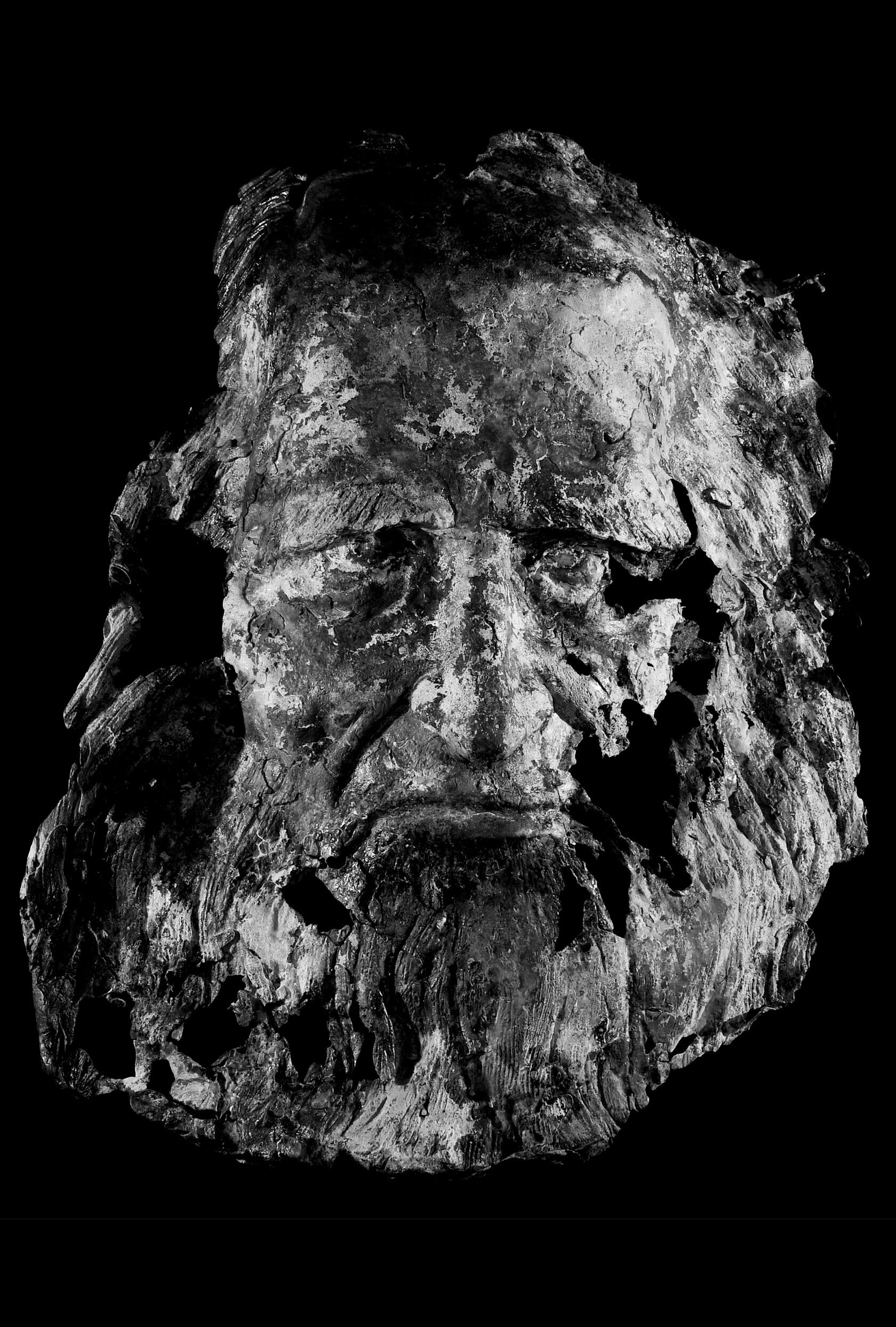
The face of Leonardo is not idealized. On the contrary, it emerges through fractures, roughness, and tears that amplify its human character. The long beard, the cavities, the creases, and the worn areas build an image that seems to come from an archaeological find, as if the Master’s thought had survived the centuries by sedimenting within the matter itself. Each mark tells of the persistence of ideas, of their ability to traverse time far beyond the life of those who generated them.
The artwork also establishes a direct dialogue with one of the central themes of Leonardo’s research: the relationship between light and shadow. The irregular surfaces capture and reflect light in unpredictable ways, creating continuous transitions between appearance and fading. The face changes depending on the vantage point, revealing hidden details and new depths. In this interplay of chiaroscuro, the sculpture pays tribute not only to the image of Leonardo, but also to his inexhaustible curiosity toward natural phenomena and visual perception.
The choice of materials subjected to chemical and thermal transformation processes is not accidental. The patinas and torchings become a metaphor for the unceasing research that characterized the entire existence of Leonardo da Vinci: a continuous experimentation in which matter, like knowledge, is never definitive but always in the making. The chromatic variations that run through the artwork, from burnished tones to green and golden reflections, suggest the flow of time and the capacity of matter to safeguard memory.
This sculpture does not mean to be just a commemorative portrait. It is a reflection on the permanence of creative thought, on the strength of ideas that survive eras and continue to inspire new generations. Leonardo appears here as a universal symbol of human research, of the tension toward discovery, and of the will to understand the world in its infinite complexity. Five hundred years after his passing, his face still emerges from the matter and the shadow, reminding us that the true legacy of the great masters does not reside in the images that represent them, but in the capacity of their insights to continue illuminating the future.